Follow a service problem
Follow school repairs and healthcare referrals through eight linked controls, from lawful authority to delivery, appeal and audit. Explore water, permits, funding and flood responses too.
Explore the proposalPakistan · Governance research · Discussion paper
When a local service fails, who can decide, who pays and where can a resident appeal? Explore a proposal that connects elected councils, professional service teams and public money people can follow.
Research edition: 15 September 2026 · Census profiles: 2023
The question behind the study
A council can receive a complaint while another institution controls the staff, assets or budget needed to resolve it. This study follows that chain through water, waste, permits, local roads and other services. It examines provincial powers, with particular attention to Sindh, and the remedies available to residents.
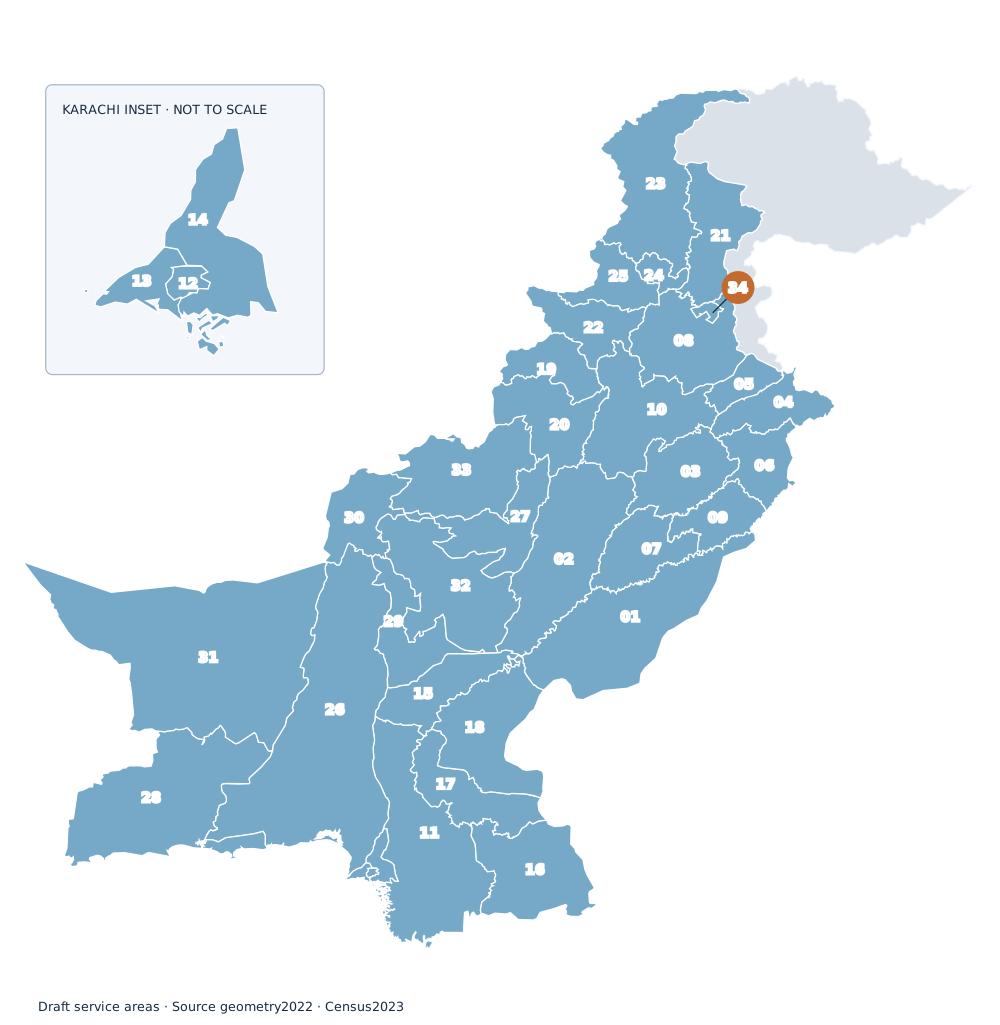
The proposal retains Pakistan’s four existing provinces and assesses Islamabad’s province status separately. Within the local-government tier, 34 administrative units would help elected councils share specialist staff and services. It compares reform under the existing Constitution with targeted amendments. The unit count and boundaries are design hypotheses to test against service networks, representation, capacity and cost.
Follow school repairs and healthcare referrals through eight linked controls, from lawful authority to delivery, appeal and audit. Explore water, permits, funding and flood responses too.
Explore the proposalSelect an administrative unit and compare population, urban share, literacy and age profiles. Every census reporting district appears once; geographic limitations are stated.
Open the atlasReview 33 proposed repairs and 101 source records. Distinguish inspected law, unresolved amendments, research findings and proposals, then follow the original sources.
Open the evidence registerThe study draws on constitutional and provincial legal texts, PBS Census 2023 tables, newer provincial survey context and published research. The September edition incorporates four papers from 2025–2026 and a May 2024 information-disclosure audit. Each research finding carries its method and limitations.
This is an independent policy proposal, not enacted reform or a tested service programme. The map does not establish current legal boundaries. Some legal originals, subsequent amendments and implementation records remain unavailable. Proposed fiscal and oversight mechanisms have not been shown to reduce corruption nationwide.
Prepared by Citadel Agentic Labs. Research owner: Ali Akber. Sources are linked to their publishers; inclusion does not imply their endorsement of the proposal.