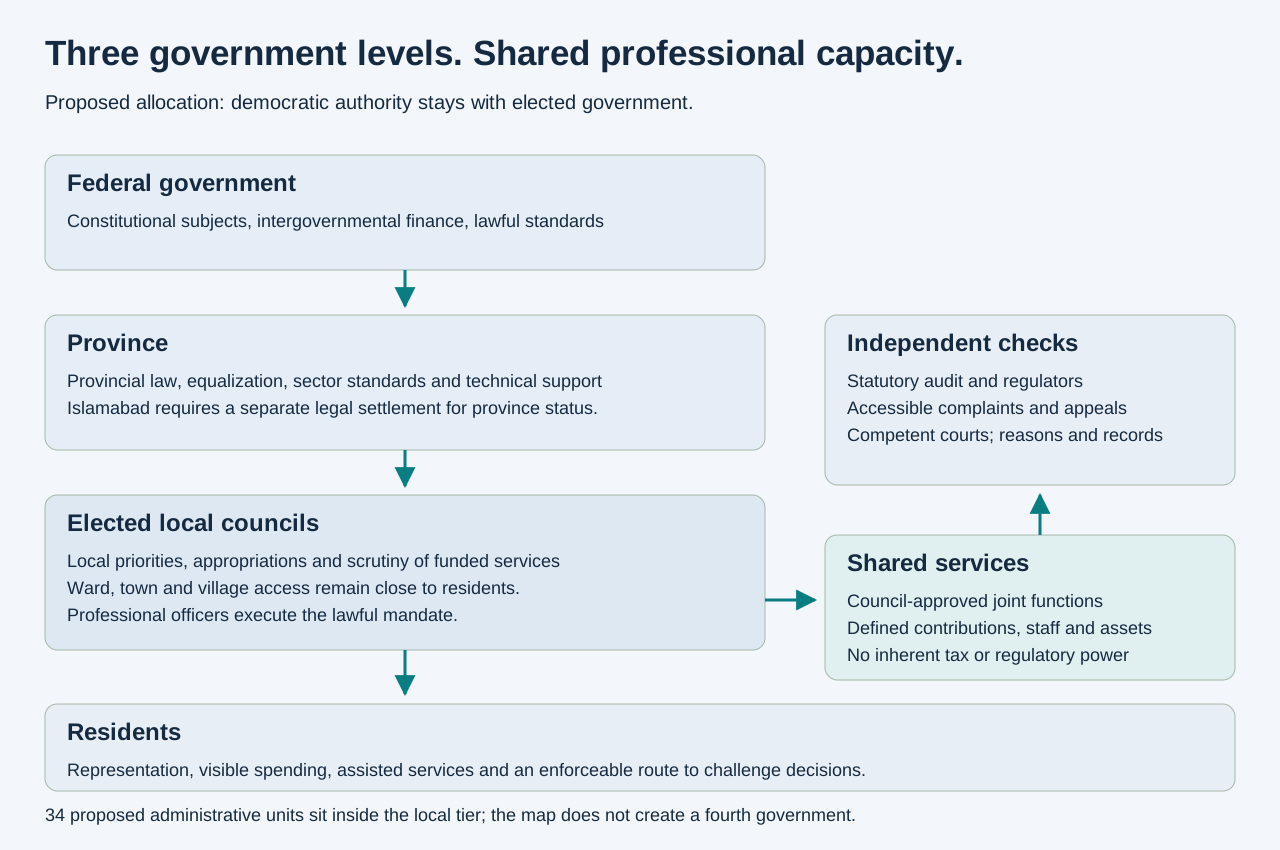
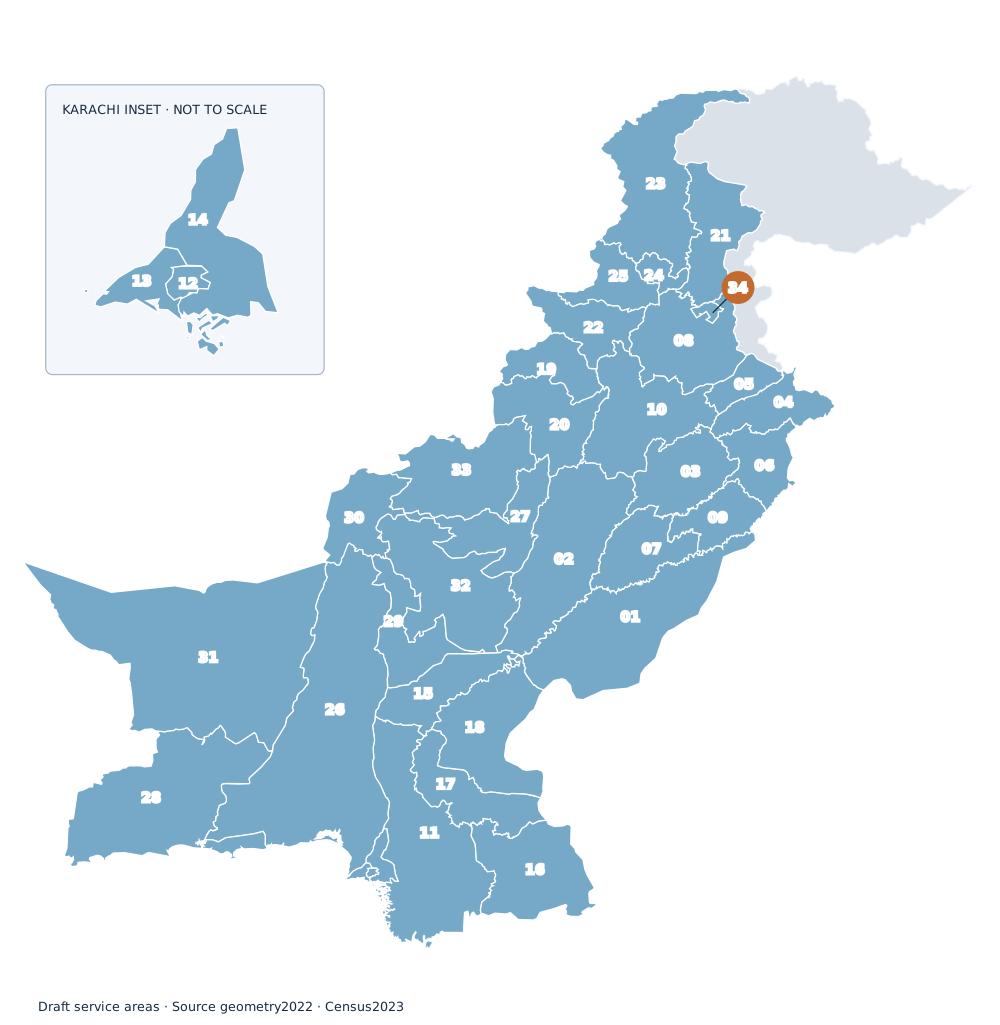
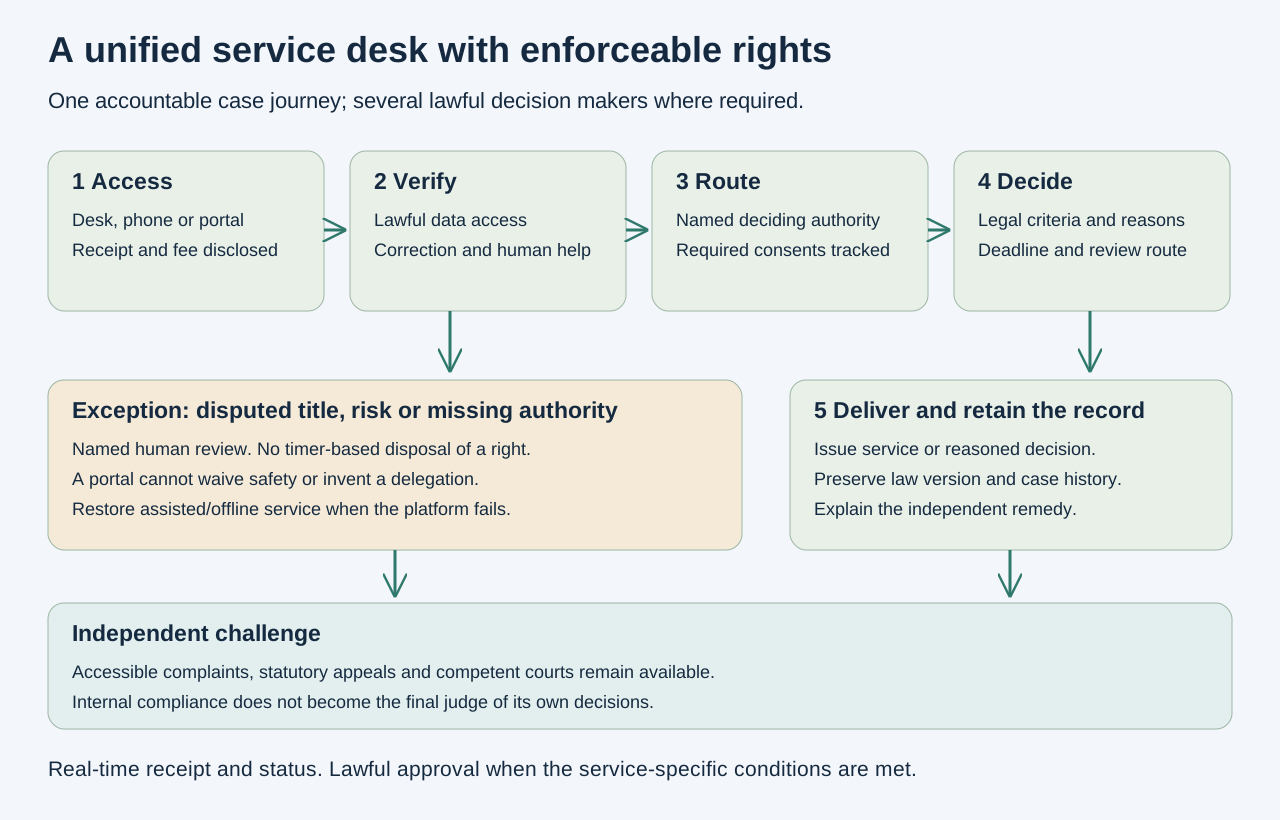
The Unified Service Desk and Integrated Digital Portal provide one intake, one case history and visible handoffs. A real-time status update is feasible; a real-time legal approval is only appropriate when the decision, evidence and law permit it. “Zero middlemen” should mean no compulsory patron or broker to obtain a service, while preserving a resident’s choice of a representative or assisted help.
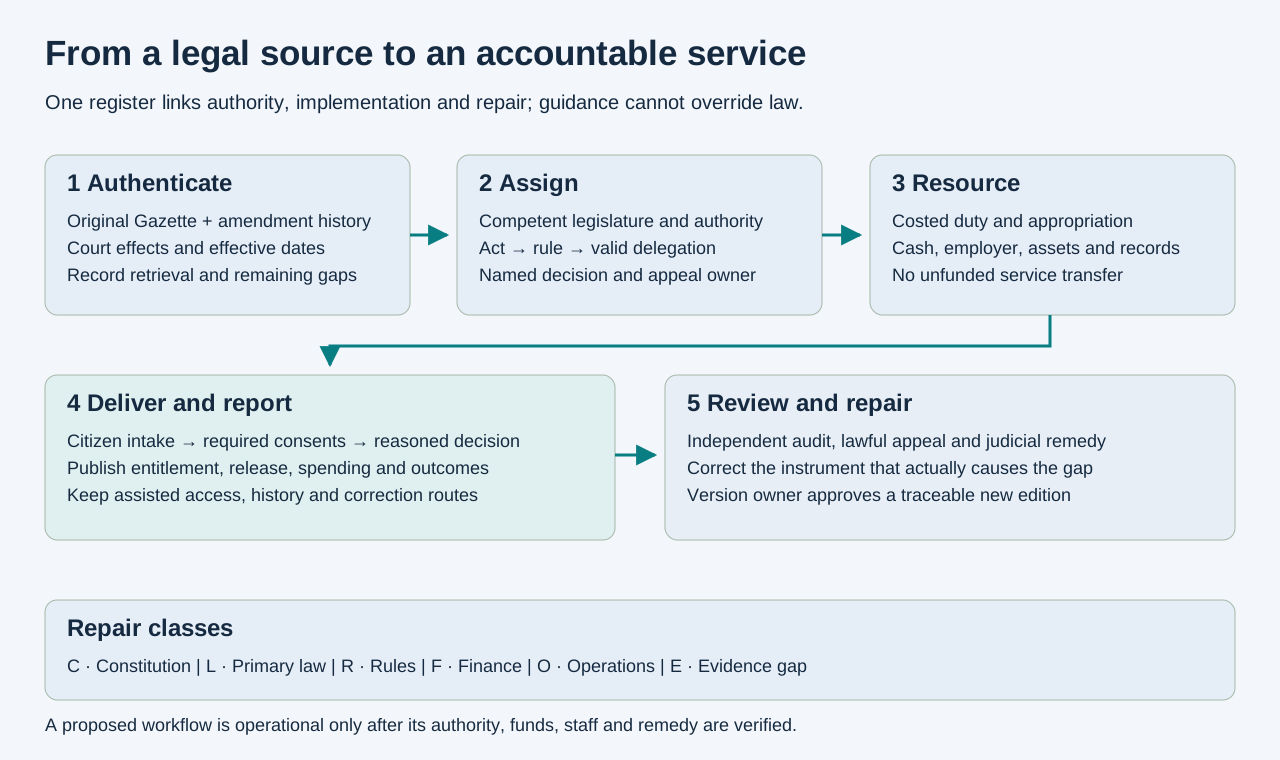
Each workflow follows the same sequence: law and jurisdiction → valid delegation → budget and staff → evidence and required consents → reasoned decision → payment or delivery → complaint/appeal → audit and learning. The register records dependencies so that a portal cannot claim completion while a statutory consent or appeal body is missing.
Do not place all regulatory control inside the administrative unit delivery authority. The provider can coordinate applications; it should not be the final adjudicator of its own land disputes, refusals or charges. Federal identity integration requires a lawful purpose, restricted access, minimum necessary data, correction rights, retention rules and accountable data sharing. Authentication is not blanket permission to connect every resident’s records.
Provide staffed counters, telephone or mobile outreach, accessible forms and local-language assistance. No smartphone, literacy level or biometric failure should remove an otherwise lawful entitlement. Essential systems need offline receipt numbering, reconciled later entry, recoverable records, tested continuity and a vendor-exit plan. Citizen-facing notices must state the deciding body, fee, expected process and review route in ordinary language.
Education Works and healthcare: test the whole service
A damaged school and a healthcare facility unable to provide the required care are useful tests of this proposal. The following designs use the service failures discussed in Nukta’s Kamran Khan episode as prompts, not as findings about a particular institution. They ask what must happen from a resident’s need to a verified outcome. 104
The chain is a set of linked controls, not eight new offices or a serial queue. Immediate safety and continuity actions run alongside repair or replenishment through lawful authority.
A damaged school needs safe learning, not just a repair invoice
A proposed education-works case: maintain safe learning while lawful repairs, staff and access are arranged.
| Control |
Responsible people and process |
Funding, authority and review |
| Law and jurisdiction |
Education department, lawful asset owner and Education Works authority. Identify the school by its official school code; verify who owns the building and who may restrict unsafe access, authorize temporary learning space and commission repairs. A new service board acquires none of these powers merely from its map. The 2021 clustering policy’s District Cluster Committee includes the Executive Engineer Education Works and recommends maintenance, repair and construction; it does not itself establish spending sanction. |
Existing education/works budgets; verify the actual holder.. Education Act sections 6-7; current works and safety instruments must be authenticated.. Escalate an immediate hazard to the competent safety and education officials; preserve the education complaint route. |
| Valid delegation |
Delegated education officer and authorized works engineer. Record the instruments and financial limits for safety action, technical sanction, procurement, work measurement and reopening. Keep the teacher employer and learning decisions distinct from building works. |
Fund the responsible posts and inspection capacity.. Valid rules, delegations and school/works arrangements; policy coordination is not spending sanction.. Record a missing or expired delegation and obtain a lawful replacement; do not let portal permissions stand in for it. |
| Budget and staff |
Education/Finance officers, works team and school leadership. Cost safe temporary teaching space, access, water and toilets alongside repair, teachers, supplies and later maintenance. Separate approved budget, cash released and actual spending; name who pays if repair is delayed. Start the safety-response clock at the first recorded hazard report. The competent authority sets a risk-based interim-learning deadline and records any missed deadline and escalation. |
Identified recurrent and capital lines; continuity provision and realistic release schedule.. Applicable appropriation, procurement and staff rules; a transfer requires an agreed funding schedule.. A funding dispute must have an owner while lawful interim schooling continues; escalate overdue releases through the applicable finance route. |
| Evidence and required consents |
Qualified engineer, school leadership and education authority. Collect a structural assessment, repair options, site/asset record and procurement evidence. Identify any required building, land-use or other consent. Consult the school management committee and assess girls’ access and disability needs; do not publish children’s identifiable records. |
Inspection, design and temporary-service costs included in the plan.. Applicable safety and works requirements; school committee functions and current departmental policy verified for the site.. Parents can challenge an unsafe or inaccessible interim arrangement; missing evidence triggers inspection, not automatic rejection of schooling. |
| Reasoned decision |
Authorized education and works decision-makers. Issue recorded reasons for the safe interim arrangement, repair option, priority and schedule. Separate technical/financial approvals and the competent decision to reopen. State conditions, accountable officers and the applicable challenge route. If temporary relocation or a lawful consolidation is considered, test travel, safety, girls’ access and disability access, consult affected families and record the competent authority’s reasons; neither is automatic. |
Approval cites the lawful budget and available funding path.. The officer acts within the authenticated delegation; coordination cannot override statutory responsibility.. Explain refusals or deferrals and the route to seek review; an engineer’s report is not itself every required authorization. |
| Payment or delivery |
Contractor/provider, independent works certifier and education authority. Verify measured works, safety acceptance and contract payment separately. Close the service case only when safe classrooms or an adequate interim location, teachers, water/toilets and access are operating; follow up whether affected pupils returned. |
Pay under the applicable contract and financial controls; preserve defects and maintenance obligations.. Procurement, works certification and reopening arrangements; no payment-only completion rule.. A contractor dispute or invoice must not erase the education authority’s continuing service duty. |
| Complaint/appeal |
Education grievance authority; separate works/procurement and legal reviewers. Keep a parent-facing case route and distinguish education-rights complaints from contract disputes. The published Education Act section 21 provides a written complaint to Government and a decision within one month after a hearing opportunity; verify the actual receiving office. |
Staff and fund receipt, investigation and review.. Education Act section 21 plus the applicable procurement, service and court routes.. That complaint period is not permission to leave a child in danger or wait a month before arranging safe learning. |
| Audit and learning |
Independent evaluator/auditor with education and community scrutiny. Compare the works record with physical safety, service availability, attendance recovery and later learning evidence. Sample repeat defects, cost changes and excluded pupils; assign corrective actions. Construction completion does not prove learning improved. |
Fund independent checks and maintenance; do not reward speed alone.. Audit and records requirements, with protected child information.. Publish aggregate findings and tracked corrections; retain lawful remedies and unresolved claims. |
Published starting points: 105 106. These establish scoped legal and policy evidence; authenticate amendments, rules, appointments and site responsibility before operation.
A patient needs safe care and a confirmed handoff
A proposed healthcare-readiness case: urgent clinician-led care or referral, with stock, staffing and accountability tracked separately.
| Control |
Responsible people and process |
Funding, authority and review |
| Law and jurisdiction |
Health department or lawful facility operator; clinical lead and regulator. For a child arriving after an animal bite, identify the licensed facility, operator and qualified clinical team. Clinical assessment and treatment remain with clinicians; public-health/animal-control coordination is a separate responsibility. This is a governance example, not treatment guidance. |
Identify the operator’s service and emergency funding arrangements.. Facility-specific authority and applicable healthcare standards; no automatic transfer of clinical powers to councils. Sindh Healthcare Commission Act 2013 (Act VII of 2014), sections 1, 3 and 4, supplies the regulator’s statutory starting point.. Urgent care and safety escalation proceed immediately through competent providers; do not wait for administrative complaint processing. |
| Valid delegation |
Clinical lead, pharmacy/supply officer and authorized spending officer. Document who may assess, prescribe, dispense, authorize stock transfer, arrange referral and approve purchases. Check credentials and escalation cover for absent staff. A shared service may support logistics only under lawful agreement. |
Fund the staffed clinical roster, supply oversight and referral coordination.. Professional authority, facility rules and valid financial/supply delegations.. Escalate to the named clinical supervisor/operator when the roster or authority fails; software cannot authorize a substitute clinician. |
| Budget and staff |
Facility operator, pharmacy/supply team and Finance. Check the staffed service, required clinician-selected medicines, safe consumables, storage, transport and a receiving facility. Fund care/referral and replenish supplies in parallel; an unfilled purchase order is not medicine on a shelf. |
Separate stock, replenishment, staff and referral costs; verify emergency resources and lawful payment rules.. Applicable service contract, appropriation, purchasing rules and clinical supply standards.. A stockout must trigger a safe clinician-led alternative/referral, not an unexplained instruction for the family to search elsewhere. |
| Evidence and required consents |
Treating clinician and supply/quality staff. Record assessment, applicable patient/guardian consent and the clinical plan in restricted records. Verify stock quantity, batch/expiry, storage and safe consumables; confirm referral capacity where needed. Do not adopt media allegations as clinical findings. |
Diagnostic, safe-care and supply-verification costs are operating requirements.. Applicable clinical consent, infection-prevention and records standards; emergency consent handled under governing clinical/legal rules.. Protect patient confidentiality and a lawful correction route; no public dashboard of identifiable child or health records. |
| Reasoned decision |
Authorized clinician; separate operator/procurement decision-maker. The clinician records reasons for treatment or referral under the applicable protocol. The operator records the stock or staffing exception and corrective action. Administrative software routes tasks; it neither diagnoses nor overrides clinical judgment. |
Care and corrective logistics have separate accountable funding paths.. Clinical standards and lawful administrative decision powers; no algorithm-created clinical authority.. Explain the care/referral plan to the patient or guardian and preserve the relevant clinical and administrative review routes. |
| Payment or delivery |
Referring clinician and named facility referral coordinator; receiving provider and responsible logistics staff. Verify that care occurred or that the receiving provider accepted and completed the handoff. Record referral acknowledgment, clinically required follow-up and supply receipt separately from supplier payment. The referring facility keeps coordination ownership until handoff is confirmed. The referring facility’s coordinator records who arranges and funds appropriate transport, the clinician-led urgency, acceptance time and handoff time, escalating any missed handoff. |
Fund referral transport where applicable and lawful; reconcile goods, care records and invoices separately.. Facility-appropriate referral, medicine and financial controls; procurement completion is not patient completion.. Escalate a failed handoff immediately; the patient must not disappear between institutions while bills are reconciled. |
| Complaint/appeal |
Facility complaint lead and Sindh Healthcare Commission where competent. Separate urgent care from later complaint handling. SHCC’s published FAQ says to complain to the establishment in writing first and approach SHCC if unresolved within 30 days; filing conditions and remit must be checked. This is not an emergency waiting period. |
Fund complaint handling, safeguarding and the applicable regulator’s process.. SHCC published complaint guidance; verify current forms, limitation periods and the correct jurisdiction.. Use immediate clinical/safety escalation for ongoing risk; preserve professional, regulatory and court routes as applicable. |
| Audit and learning |
Clinical quality team, independent reviewer and financial auditor. Check referral completion, stockout recurrence, expiry/storage failures, infection-prevention compliance and patient access against records. Investigate suspected harm through competent clinical/public-health processes. Audit flags are not diagnoses or findings of guilt. |
Fund quality review, stock controls and corrective action; measure quality with access.. Applicable clinical governance, regulatory, audit and privacy requirements.. Track corrections and aggregate outcomes; do not infer causation or programme success from a single case or a closed ticket. |
Published starting points: 109 107 108. These establish scoped legal and policy evidence; authenticate amendments, rules, appointments and site responsibility before operation.
People, data, process and technology
People: assign an accountable coordinator and preserve the separate powers of engineers, teachers, clinicians, finance officers and reviewers. A shared team can supply scarce expertise where legally enabled; it does not acquire every sector power. Data: link the school or facility ID, case, delegation, budget, evidence, decision, delivery and review history. Separate protected pupil and patient records from public performance reporting. Process: provide an urgent continuity path alongside the permanent remedy, with named handoffs and escalation. Technology: show outstanding dependencies, support offline access and preserve corrections and access logs. A dashboard may flag missing evidence; it cannot declare a building safe or make a clinical decision.
Legislative repair and proof of delivery
For each selected site, authenticate the education/health function, asset owner, employer, delegated officer, funding and review route. Record gaps against R15, R24, R28, R32 and R33. Use primary legislation only where statutory duties must change; otherwise use valid rules, delegations, appropriations or operating agreements. School committees and local councils may monitor access and lawfully assigned works; they do not gain teacher-employment or clinical powers by implication. These are common controls: R15 is valid subordinate instruments; R24 is funded mandates; R28 is lawful records, consent and remedies; R32 is independent checks; R33 is service and liability continuity. Sector-specific powers still require their own authenticated instruments.
No operational pass until authority, funding, staff, safe continuity, actual service, reachable review and independent evidence are demonstrated. The designs do not establish affordability, clinical effectiveness or corruption reduction. Measure resident travel, time and out-of-pocket costs alongside institutional results. A repair invoice is not proof of safe schooling. A referral slip or a delivered medicine carton is not proof that a patient received appropriate care.
For education, test time to safe learning, independently checked repairs, usable water and toilets, staffing and continued access; assess learning separately. For healthcare, test timely clinical assessment, confirmed handoff when referral is needed, usable stock and staffing, and independently reviewed service quality. Do not infer clinical causation or savings from a completed administrative record.
Source note: The episode’s school material around 04:11–06:52 and healthcare material around 07:11–09:13 informed the examples. Automatic captions and selected frames were inspected, not full audiovisual playback. Some footage is archival; the examples do not depend on its year, and programme figures and allegations are not adopted as verified current conditions.